
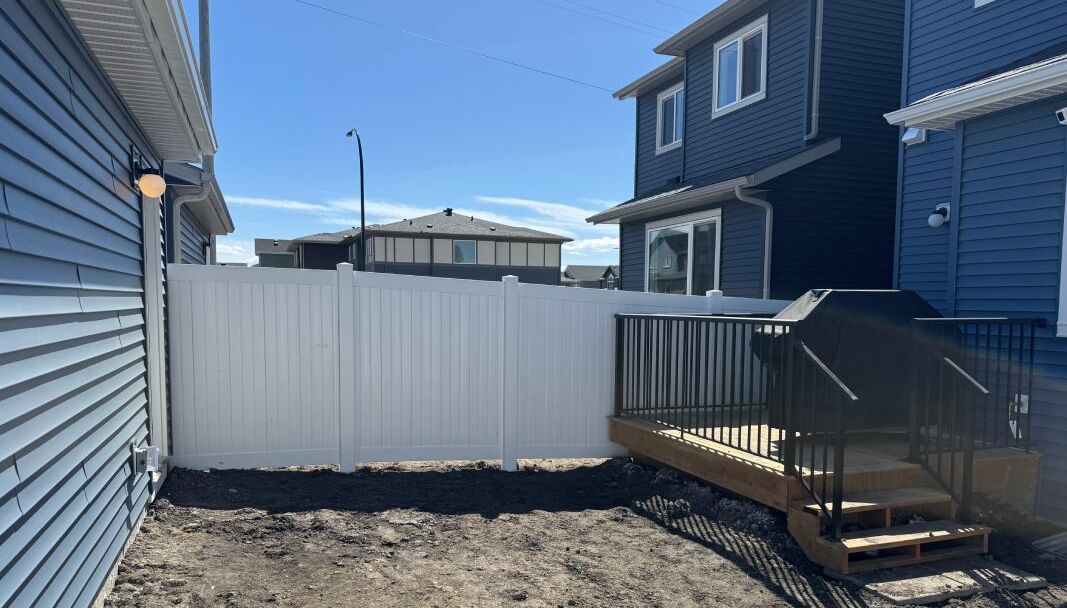
Moving into a newly built home is an exciting milestone. You’ve picked your finishes, settled into your space, and are ready to make the property truly yours. However, for many new builds in Calgary, one major piece of the puzzle is missing when you hand over the keys: the backyard fence.
Building a fence is one of the very first exterior projects new homeowners tackle. It defines your boundaries, keeps pets and kids safe, and gives you that much-needed privacy from day one. But before you run to the hardware store or lock in a contractor, you need to complete a few critical administrative and logistical steps.
To help you navigate the process, we’ve put together the ultimate vinyl fence installation Calgary guide for new homeowners. We detail exactly what you need to know before breaking ground.
Steps to Follow for a New Home Fence Installation
1. Check Property Lines and Real Property Reports (RPR)
It can be tempting to eye-match your fence line with where your house ends or where the grading stops, but guessing is a recipe for costly legal disputes. If you install a new fence even a few inches over your home’s property line, you could be forced to tear the entire structure down.
Before planning your layout:
- Locate your RPR: As a new home buyer, your builder or lawyer should have provided you with a current RPR. This legal document displays the exact boundaries of your property, complete with surveyor stakes and dimensions.
- Find the pins: If you want to be entirely sure, look for the iron property stakes buried at the corners of your lot.
Building exactly on the property line means the fence is shared. Building entirely within your property line means you own it; but it also means you lose a fraction of your yard space and are solely responsible for its upkeep.
2. Understand Calgary Bylaws & Architectural Guidelines
Every municipality has strict rules regarding what you can and cannot build. Failing to follow local bylaws when starting a vinyl fencing installation in Calgary can result in fines or a mandatory teardown.
Here are a few Calgary bylaws to keep in mind:
- Height Limitations: In standard residential areas, your backyard fence cannot exceed 2 metres (about 6.6 feet) in height. Front-yard fences are capped at 1.5 metres (about 4 ft).
- Post Depth: Posts must be dug 4ft deep to avoid frost damage.
- Corner Lots & Sightlines: If your new home sits on a corner lot, your fence installation must respect the "corner visibility triangle." To ensure drivers have clear sightlines at intersections, fence heights at street corners are limited to 0.75 metres (2.46 ft).
- HOA & Architectural Guidelines: New communities often have specific architectural controls set by the developer or Homeowners Association (HOA). These guidelines may dictate the exact colours, styles, and materials you can use to maintain a cohesive look across the neighbourhood.
3. Talk to Your Neighbours About Sharing the Cost
One of the unique advantages of fence installation for new homes is that your neighbours are likely in the same boat as you, staring out at a blank slate of dirt or sod.
Before you finalize a design, talk to your neighbours. Discussing the project early opens up cost-sharing opportunities. Typically, adjacent homeowners split the cost of a shared property line fence 50/50.
When you discuss this possibility with your neighbour, try to agree on:
- The material and style of the fence (choosing a low-maintenance option like vinyl fencing is a win-win, as neither party will ever have to worry about staining, painting, or replacing rotting wood boards.)
- Hiring a professional installer.
- How to split the cost.
Getting everyone on the same page from the start ensures a smoother project and fosters a strong relationship with your new community right out of the gate.
4. Secure the Right Permits
A standard residential fence that abides by Calgary’s height limits doesn’t generally need a building or development permit. However, you will require a permit for your project if:
- You want a backyard fence higher than approximately 6’ 5” (2 metres).
- Your property is located in a special flood zone or environmental reserve.
At New Age Fencing Solutions, our team will handle the permits for non-standard fence heights to ensure nothing gets missed or overlooked.
5. Manage Timelines
When a new community is built, the earth undergoes serious disruption. Excavation, foundation pouring, and utility digging loosen the soil. Before installing a fence, the ground needs time to settle, and the final grading must be officially approved by the municipality. Setting heavy fence posts in unsettled soil can cause your fence to lean or sag over time as the ground shifts.
Working with a professional team, such as New Age Fencing, ensures that your new fence is installed at the optimal time according to your property’s rough and final grade certificates.
6. Always Call Before You Dig
Whether you are digging the post holes yourself or hiring a team, hitting an underground utility line can be disastrous, dangerous, and incredibly expensive. Before a single shovel hits the ground, submit a locate request to Utility Safety Partners (formerly Alberta One Call). They’ll come out to map and mark all buried gas, electrical, and water lines so you can place fence posts safely.
Leave Your New Fence Installation to the Pros at New Age Fencing
Getting a fence up quickly and correctly is the best way to make your new house truly feel like home. At New Age Fencing, we take the stress out of the fence installation for new homes. From ensuring full compliance with local Calgary bylaws to managing the utility line locates, our team handles all the administrative hurdles for you.Plus, our premium vinyl fencing options give your new property a clean, contemporary look engineered to survive Alberta’s harsh winters without fading, cracking, or requiring maintenance.
Ready to start on your new fence? Contact New Age Fencing Solutions today for a custom quote.
FAQ
How much does vinyl fencing installation cost in Calgary?
The cost of a vinyl fence depends on the style, colour and scope of work required to install a new fence in Calgary.
How long does vinyl fence installation take?
The average installation time is 1-3 days. This depends on several factors, including the type of fence you’ve selected and the size of your lot, acreage or business.
Does vinyl fencing require maintenance?
Vinyl fences are low maintenance compared to wood. You can clean your fence with a warm-water rinse and soap. Vinyl’s non-porous material gives it a clean, smooth look with minimal cleaning. No painting or staining is required.
Are vinyl fences environmentally friendly?
Yes, choosing a vinyl fence is sustainable. All of our vinyl fences are made out of pre-consumer reclaimed PVC. Vinyl fences last longer than wood and generally also produce less waste.
Can our vinyl fencing handle Calgary winters?
Yes, our vinyl fences are durable and long-lasting. Engineered to withstand the elements in any season, our vinyl fencing won’t crack or rot. These vinyl fences stay beautiful for years without degrading.